Just 29% of U.S. employees were engaged at work in the third quarter of 2026, the lowest level since 2011, according to Gallup’s October 28 update. Employees also reported less clarity about expectations and were less likely to feel that someone at work cares about them as a person. For leaders, those findings raise a question: What steps can lead to meaningful change in the workplace?
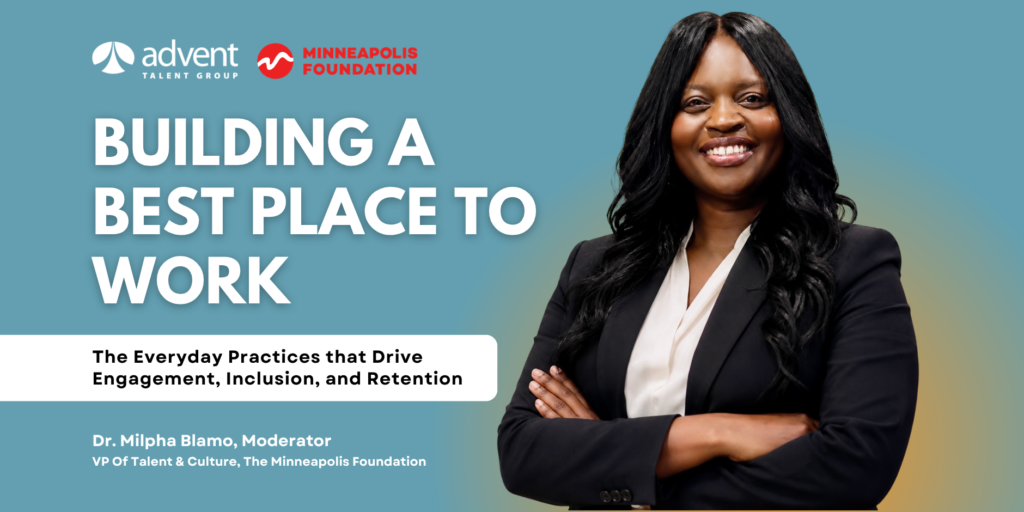
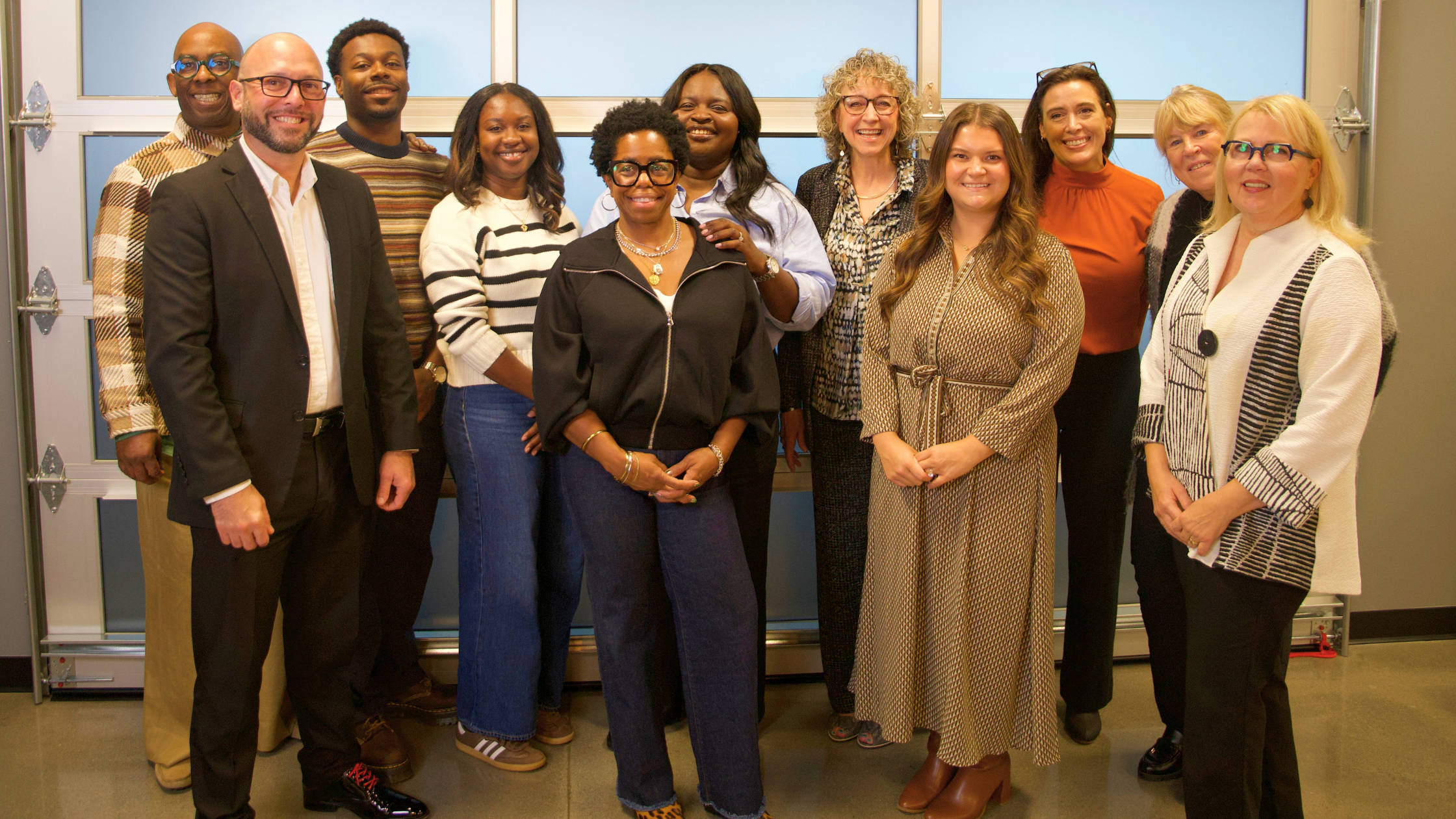
On Tuesday, October 13, Advent Talent Group put that question to The Minneapolis Foundation’s Talent & Culture team at our Building a Best Place to Work event. Speakers included Dr. Milpha Blamo, Vice President of Talent and Culture; Joe Moryn, Payroll & Benefits Manager; Deven Nebo, Talent Acquisition Manager; Mikal Nabors, Engagement & Event Director; and Melissa Weiler, Facilities & Office Manager.
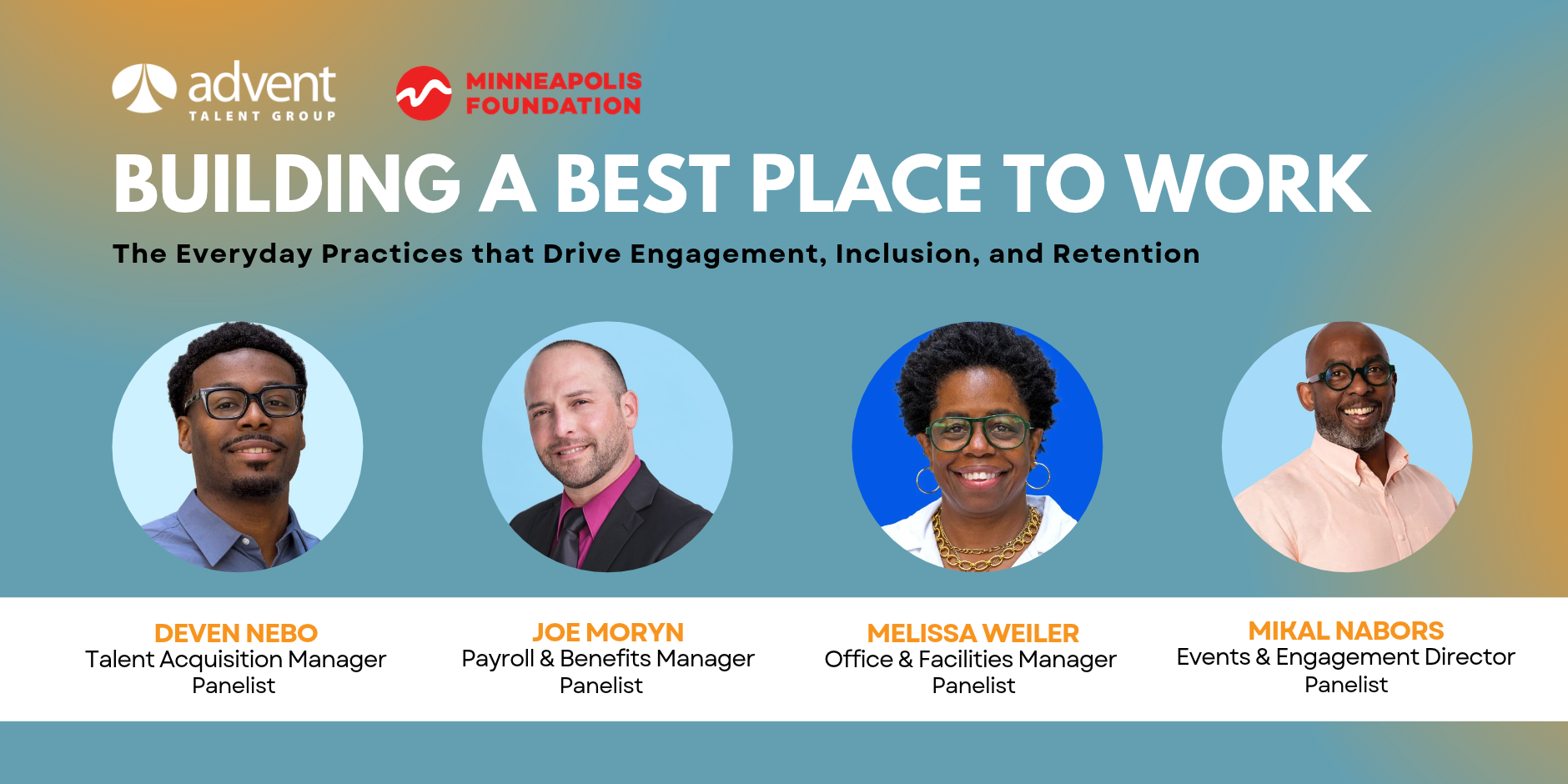
The team shared practical, everyday approaches to strengthening engagement, inclusion, and retention. Here are the six that stood out:
- Treat Employees Like Your Most Important Clients
- Take the Friction Out of Hiring
- Hire for Culture Add, Not Just Culture Fit
- Design Benefits Around What People Actually Need
- Build Connection and Care into Every Workday
- Create Space to Engage and a Clear Path to Grow
1. Treat Employees Like Your Most Important Clients
Mikal Nabors urged leaders to treat employees with the same care they give clients. At The Minneapolis Foundation, where employees may carry heavy and difficult work in service of the community, that principle guides the Talent & Culture team’s intentional approach to designing the employee experience.
💡 Advent Insight: Pick one employee experience, for example, the first 30 days, benefits enrollment, or a high-volume week, and map it out. Where does the experience fall short of what you would accept for a client?
2. Take the Friction Out of Hiring
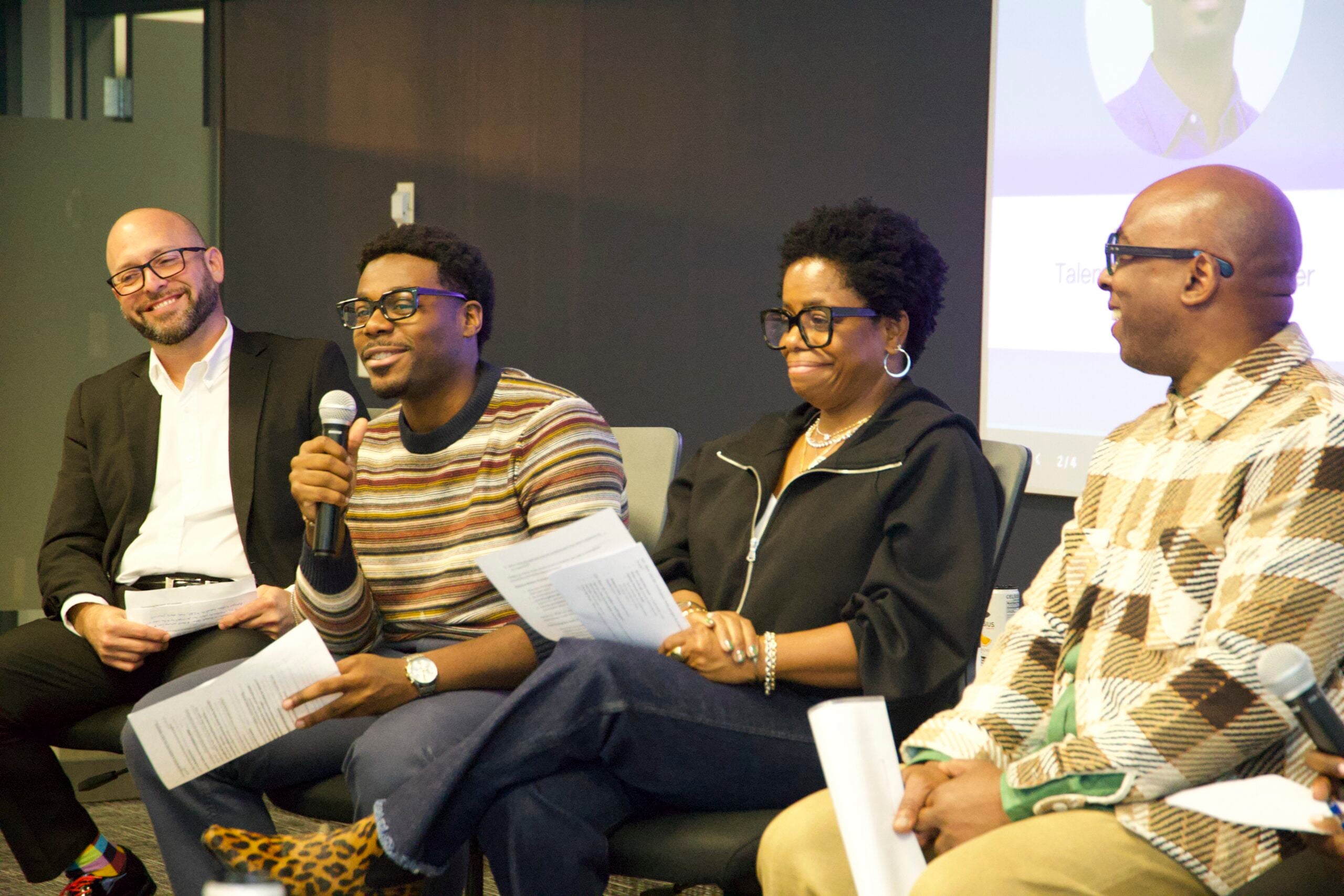 As Talent Acquisition Manager, Deven Nebo focuses on making the hiring process clear and accessible. He emphasized educating applicants early about the role and industry, simplifying interviews, and helping candidates understand how their skills could translate to the organization.
The recommendations were specific:
- Educate applicants early about the role and the industry. Deven Nebo noted that philanthropy is often misunderstood, and that explaining it opens the door for people who may not know they are qualified, including younger candidates who can then see the career path. Career fairs and outreach beyond your usual networks widen the pool.
- Audit your hiring artifacts. The team worked with Trina Olson, author of Hiring Revolution and a hiring coach, to audit their hiring process. Job descriptions were one area they flagged for improvement.
- Use rubrics. The panel described them as essential to hiring well.
- Simplify the process. Do you need three rounds for every role? Do six or more people really need to sit on a panel?
- Be clear in your interview questions and share them with candidates ahead of time. The team observed that a question about equity was not understood by everyone, a reminder to write questions in plain language.
- Choose a handful of simple, specific culture questions and rotate one or two at a time, rather than repeating the same ones.
- Train everyone involved in hiring. Anyone who interviews or contributes to a hiring decision should complete basic training on interviewing and hiring bias.
What the research says. The panel’s instincts line up with the data. Glassdoor’s June 2026 analysis lists disrespected time, a slow process, and pay that misses expectations as the top reasons candidates withdraw. A July 2026 review in Reworked reports that 39% of companies admit candidates face too many interview rounds and 52% admit their own process is too long.
💡 Advent Insight: Survey candidates, not just hires, about a week after each interview. Glassdoor recommends reaching out five to seven days later to capture feedback from everyone who reaches the interview stage, not only those who accept an offer.
3. Hire for Culture Add, Not Just Culture Fit
The panel encouraged hiring for culture add, not only fit: What could a candidate contribute? What could the team learn from them? How might they move the culture forward? Deven suggested asking candidates those questions directly.
In practice, that means naming the gaps in perspective, skills, and experience on your current team before the search starts and writing them into the rubric.
Candidates in the second act of their careers offer another way to think about culture add. When an audience member asked how these candidates can get employers to see them as a viable option, Deven recommended using any space an application allows to explain their passion, alignment with the organization, and why they should be considered despite looking overqualified.
💡 Advent Insight: Employers can meet candidates halfway by adding space for that statement in their hiring process, providing a chance to learn what candidates could contribute beyond what’s listed on their résumé.
4. Design Benefits Around What People Actually Need
As Payroll & Benefits Manager, Joe Moryn uses data and employee feedback to understand whether benefits are meeting employees’ needs. He recommended regularly reviewing which offerings employees use, how often and by whom, and exploring why others go unused.
When employees were underutilizing the telehealth benefit, the team got feedback that prompted them to explore other options, like Nice Healthcare, whose clinicians can visit employees at work or at home as needed.
Other practices from the panel:
- Look at your demographics, including age, location, and lifestyle, and meet people where they are in different stages of life.
- Ask what people need and give them a safe, private way to answer.
- Review compensation on a regular cycle, such as every couple of years, and communicate what you learn. Even when adjustments are not possible, consistency and communication show employees that the organization is paying attention and will make changes as they are able.
Why it matters now. The cost pressure is real. Mercer’s 2026 National Survey of Employer-Sponsored Health Plans projects that health benefit costs per employee will rise 8.2% in 2027, the highest increase since 2003, and that 59% of employers plan cost-cutting changes such as higher deductibles. When employers are asking employees to absorb more, knowing which benefits people value and use is the difference between cutting blindly and spending where it counts.
5. Build Connection and Care into Every Workday
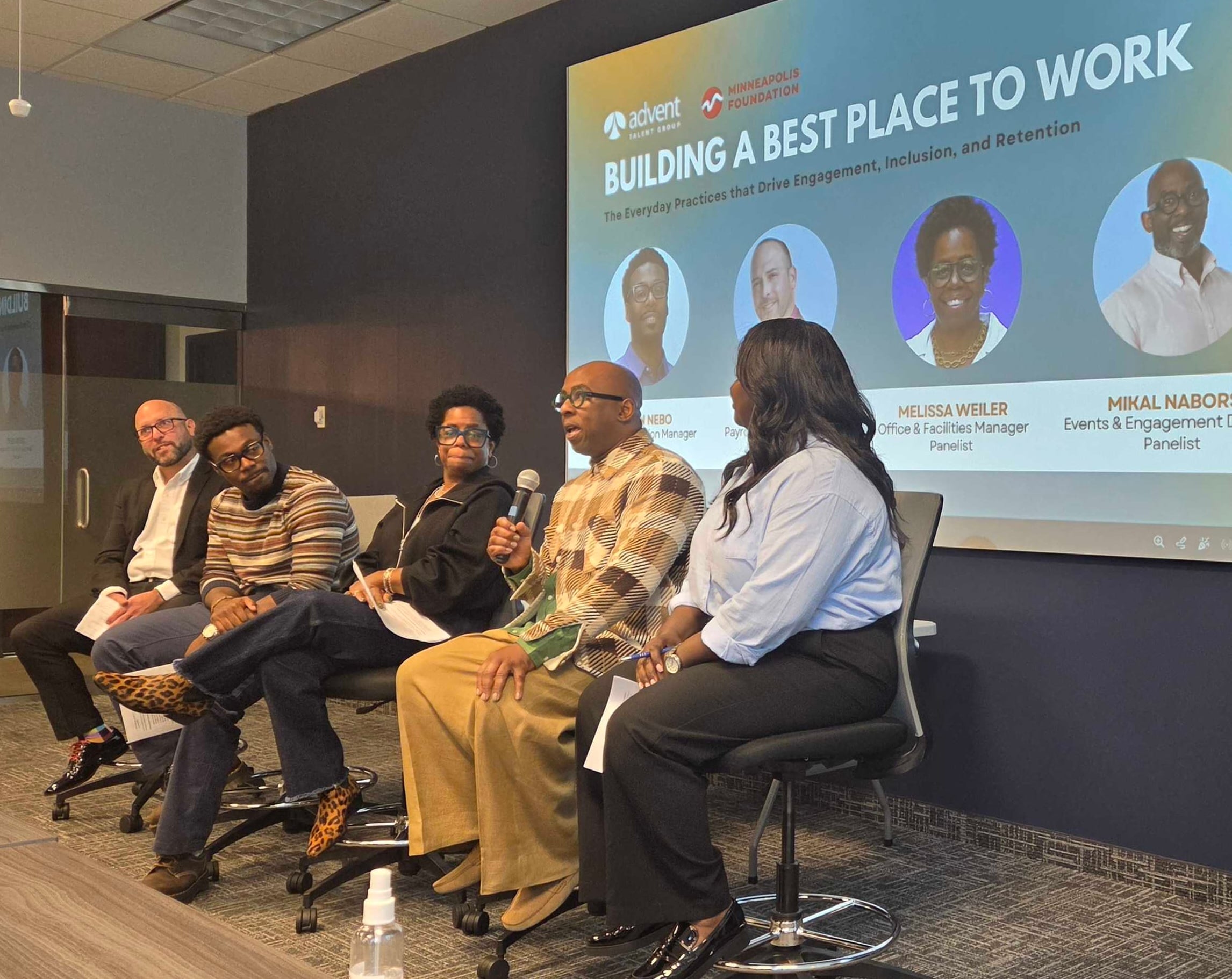 As Events & Engagement Director, Mikal Nabors knows something about bringing people together. He began catering all-staff lunches during the pandemic and continued the practice because of what it created: connection, conversation, engagement, and a sense of fun and levity. A shared meal gives people a way to decompress and builds a genuine community. Mikal recommended making food a dedicated budget item to strengthen employee relationships and create connection across departments.
Melissa Weiler focuses on creating an inclusive, ergonomic workplace in her role as the Office & Facilities Manager. To understand employees’ needs, she recommends pairing brief surveys with direct observation, walking through the workplace, talking with people, and noticing how they use the space. In addition to ergonomic spaces, the team offers a wellness room for when privacy or a quiet break is needed, along with practical supplies such as toiletries and a sewing kit.
Why it matters now. Gallup’s 2026 global workplace data found that 40% of employees experienced significant stress the previous day, while 22% reported feeling lonely. Regular opportunities to connect, recharge, and access support can make the workday feel less isolating and more sustainable.
6. Create Space to Engage and a Clear Path to Grow
An audience member asked how leaders can engage employees who are too busy to participate in culture activities, perks, or benefits. The panel suggested first identifying what is getting in the way, then considering:
- Conducting a workload analysis to spot overloads and get people support.
- Encouraging people to block focus time and building and modeling a culture that respects these calendar blocks.
- Creating smaller ways to connect. An hour-long interdepartmental event may not be possible, but a 20-minute walking meeting or a coffee break might be an option.
The team holds one learning session per quarter for the whole organization on a selected topic. Each department also has its own monthly learning, and the Talent & Culture team chose inclusion as its topic. Alongside group learning, the team creates an individual development plan for each person.
💡 Advent Insight: Review the exit interviews from your last few employee departures. Look for themes related to growth, learning, career advancement, or development. The patterns may reveal opportunities to improve engagement and retention long before employees decide to leave. Use this information to guide conversations with current employees about their development goals and next steps.
Ready to Get Started?
If you take one step this month, consider:
- Write a rubric and a short set of plain-language questions for your next search and share interview questions with candidates ahead of time.
- Pull usage data on your top three benefits and ask employees why the least-used one is underused.
- Add one recurring moment of connection to the calendar, such as a shared meal or a 30-minute walking meeting.
- Choose one learning topic for the whole organization and ask each employee about their development goals.
About Advent Talent Group
Flexible Talent Solutions for What’s Next
Since 1985, Advent Talent Group has supported Minnesota businesses through every economic shift. We build relationships that last. Clients partner with us across multiple organizations, and candidates trust us throughout their careers.
Advent specializes in Office & Accounting, Human Resources, Marketing & Creative, and Non-Profit. Our solutions include Staffing & Recruitment, HR Outsourcing, and Consulting & Strategy. With a 97% client satisfaction rate and 94% retention rate, you get proven expertise and personalized attention from a partner who cares.
Our small, award-winning team puts people at the center of everything we do. Each year, the company gives back more than 10% of its profits through its giving program, Advent Cares, and we are committed to partnering with organizations that share a dedication to service, collaboration, and equity.
To learn more, visit www.adventtalentgroup.com.
Sources
Research cited in this article is from outside sources and is separate from the panelists’ remarks.
- Gallup, U.S. Employee Engagement Below 30% for First Time in 15 Years, October 28, 2026
- Gallup, State of the Global Workplace: 2026, and U.S. country-level data
- Gallup, Global data summary, 2026
- Glassdoor, How to measure candidate experience, June 29, 2026
- Reworked, 17 Interviews to Get a Job? Welcome to 2026 Hiring, July 7, 2026
- Sackett, Zhang, Berry, and Lievens, Revisiting meta-analytic estimates of validity in personnel selection, Journal of Applied Psychology, 2022
- Mercer, Employers expect health benefit costs to jump in 2027, 2026
- Recruiting News Network, Human touch vs. AI: Navigating the new hiring landscape, January 21, 2026